
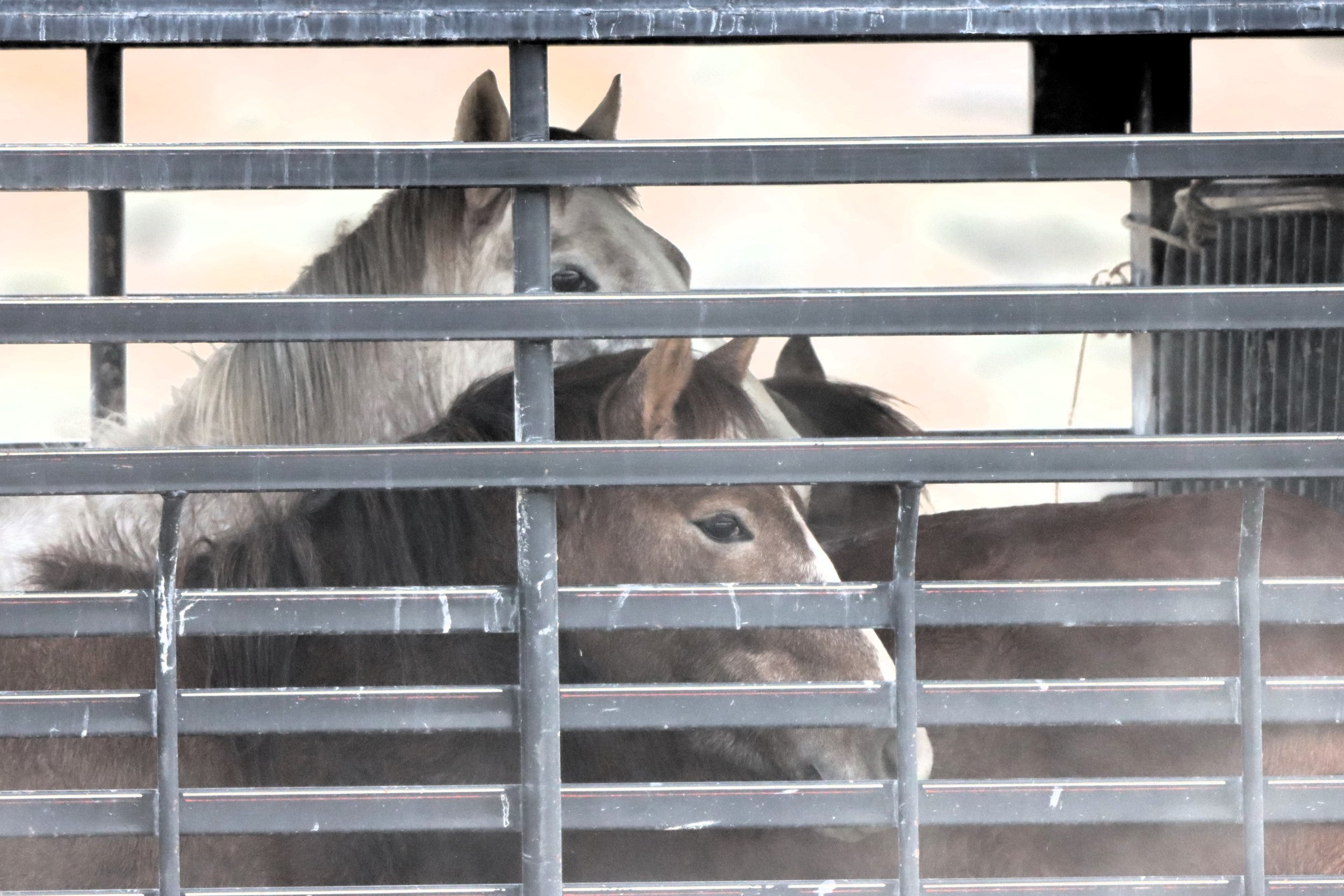
Genetic Vulnerability of the Jackson Mountains Wild Horse Herd: Sterilization and Inbreeding Concerns
The debate over the Jackson Mountains HMAP highlights a fundamental tension in wild horse management. The BLM relies on the ability to artificially manage genetics through translocations (the metapopulation approach) to justify maintaining small, highly managed herds with sterilized components. Conversely, advocates and conservation geneticists warn that driving effective population sizes well below the minimum viable thresholds especially in a herd with documented historical inbreeding creates an unacceptable risk of genetic collapse, transforming a wild, self-sustaining population into a heavily engineered, artificial herd.
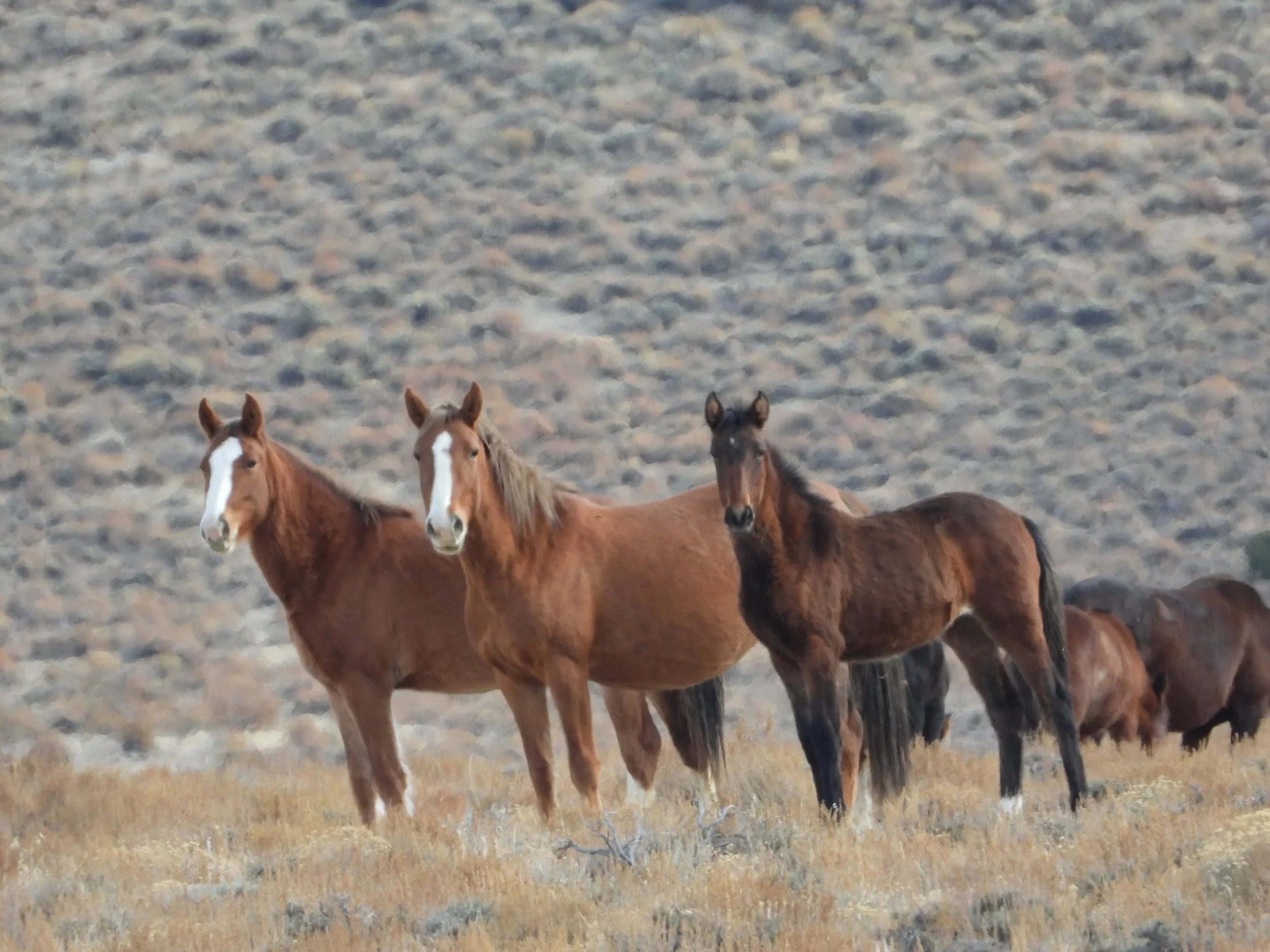
BLM Is Taking Public Comments on the North Complex Wild Horse Gather Plan: Our Horses Need Us to Speak Now
This is why public comments should ask BLM to do more than repeat the same cycle: gather, remove, hold, and return again later. The National Academies’ 2013 review of BLM’s Wild Horse and Burro Program recognized public concerns that AMLs may be too low to maintain genetically healthy herds and that horses experience stress during gathers and in holding facilities. It also found that, at the time of review, many BLM population-monitoring procedures were not rigorous, were inconsistently documented, and did not quantify uncertainty. The current EA uses a 2024 aerial survey and projects the 2026 population using an assumed growth rate, but the public should ask BLM to clearly disclose uncertainty, confidence intervals, foal assumptions, mortality assumptions, and how those estimates translate into removal targets.
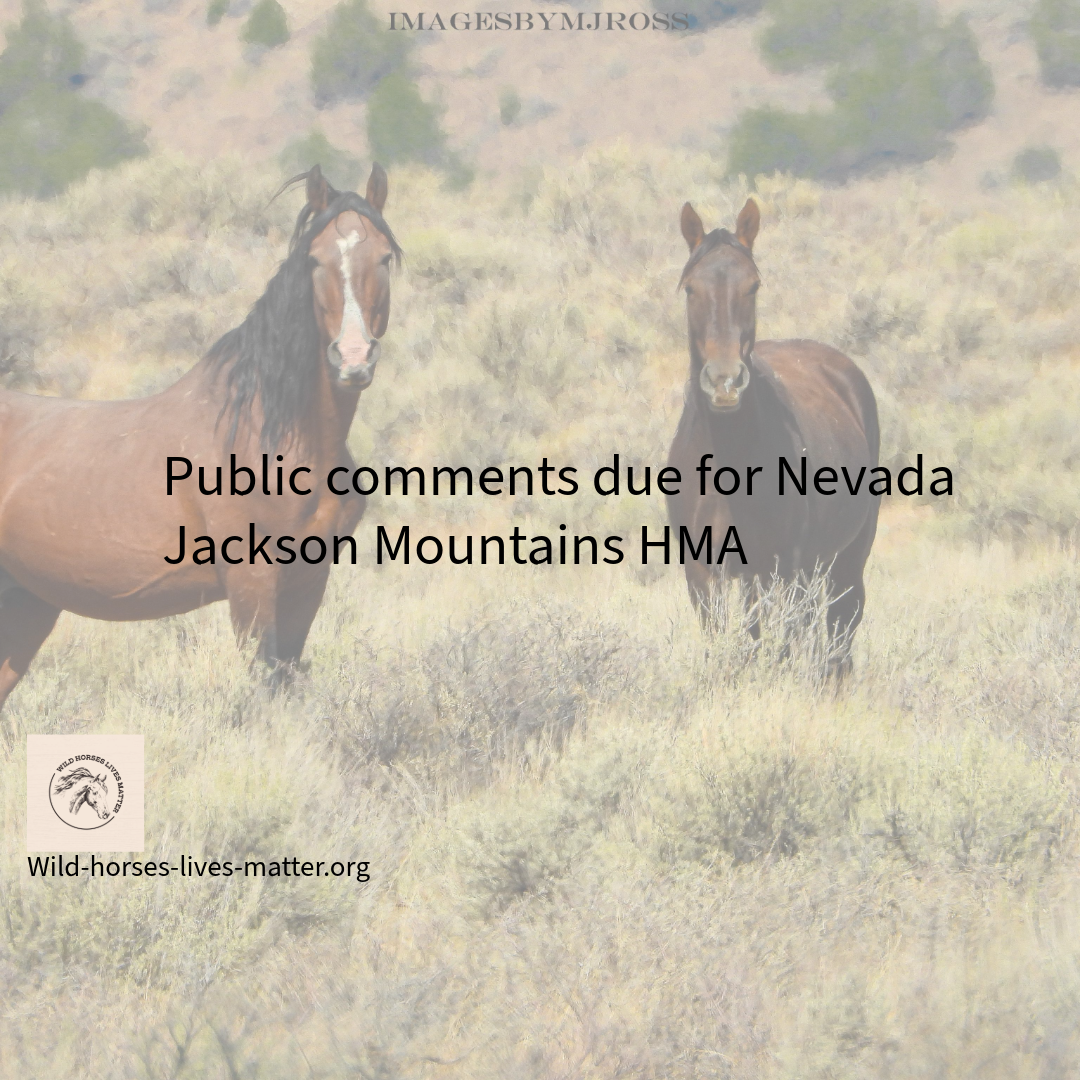
Jackson Mountains Wild Horse Herd Management Area Plan Preliminary Environmental Assessment public comments due
The Jackson Mountains wild horses cannot submit comments. We must do it for them.
Please take a few minutes today to submit your comment, then share the comment link with friends, family, photographers, adopters, rescue supporters, and everyone who believes wild horses deserve humane treatment and a fair future on the range. The more specific, respectful, and heartfelt our comments are, the stronger the public record becomes.
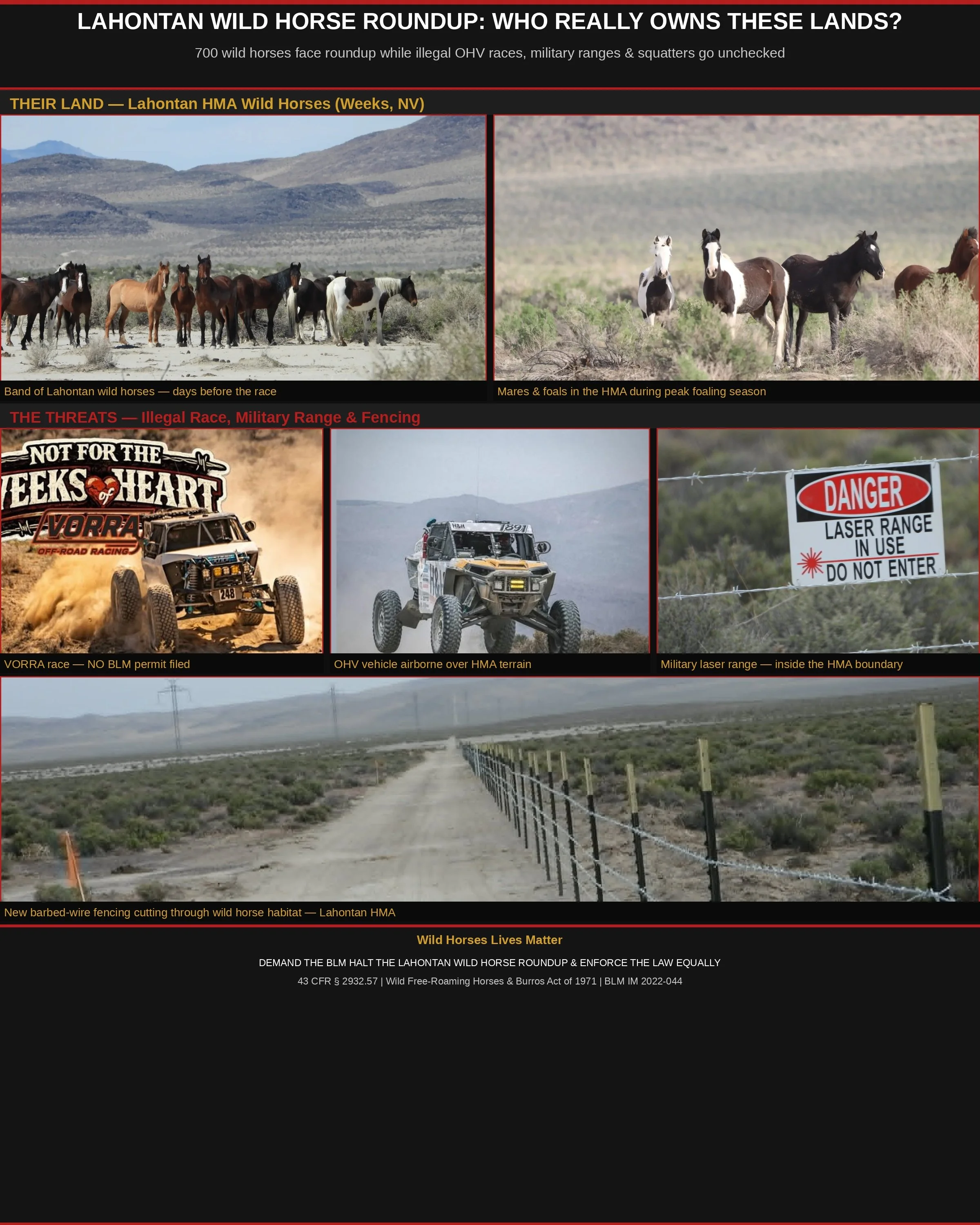
Contradictions in Public Land Management: The Lahontan Herd Management Area Wild Horse Roundup
The Bureau of Land Management (BLM) has authorized a massive wild horse roundup in the Lahontan Herd Management Area (HMA) in Nevada, aiming to remove nearly 700 wild horses and reduce the population to a scientifically and genetically unviable Appropriate Management Level (AML) of just 7 to 10 horses . The BLM justifies this extreme action under Section 1333(b) of the Wild Free-Roaming Horses and Burros Act (WFRHBA), citing the need to "prevent undue or unnecessary degradation of the public lands" and "restore a thriving natural ecological balance" .
However, an examination of current public land use in and around the Lahontan HMA reveals glaring contradictions in the BLM's management priorities. While wild horses are targeted for near-total removal due to alleged environmental degradation, the BLM simultaneously permits massive commercial livestock grazing operations, facilitates military bombing range expansions, and fails to enforce federal law against unauthorized human activities including a 250-mile off-highway vehicle (OHV) race run illegally through the heart of the HMA during peak foaling season, and long-term squatters and illegal encampments that go largely unaddressed
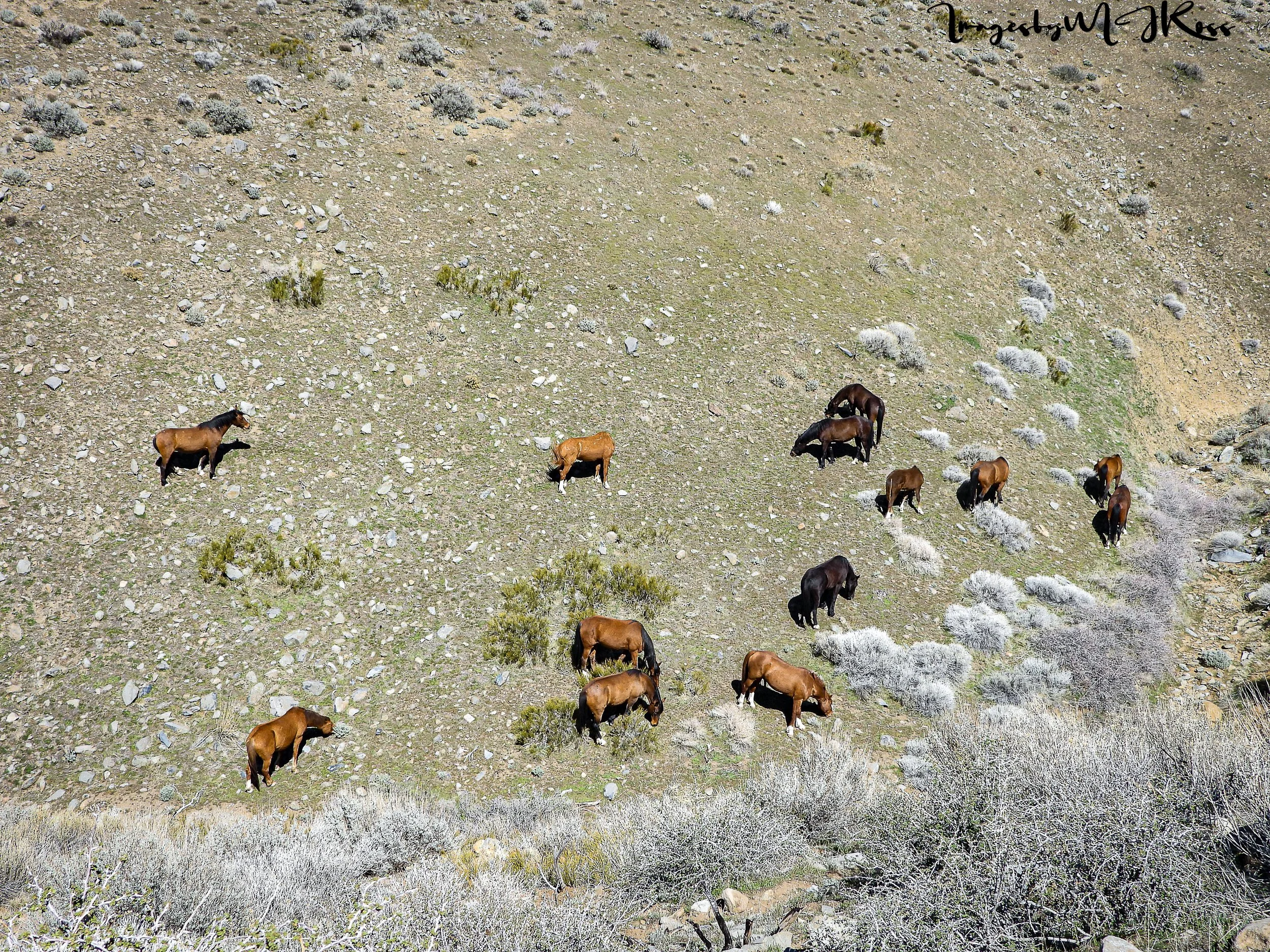
Virginia Range Mustangs Need you to speak up NOW
The Bureau of Land Management (BLM) and the Nevada Department of Agriculture (NDA) have proposed the Virginia Range Fence Line (VRFL) project (DOI-BLM-NV-C020-2026-0016-CE), which involves constructing approximately 14 to 23 miles of new four-wire fencing along the western boundary of the Virginia Range in Nevada. The stated goal is to enhance public safety by preventing wild horses from entering adjacent housing communities and roadways.
However, an in-depth analysis of the project maps and environmental data reveals a critical concern: the proposed fencing will sever wild horses from vital water sources. Specifically, the "Jumbo West" fence segment bisects mapped Freshwater Emergent Wetlands, Freshwater Ponds, and Riverine features. This effectively fences horses out of their historical water access points.