Here’s a clean, ready-to-use history section you can place as the opening post or the main “History” page of your blog:
---
A Brief History of the Virginia Range Horses
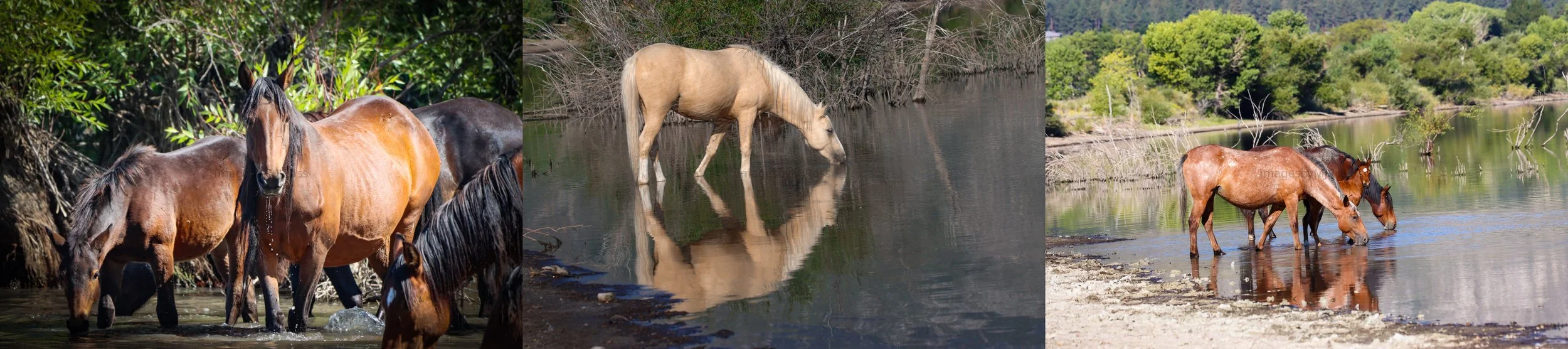
The free-roaming horses of the Virginia Range have deep roots in northern Nevada. Their ancestors include animals that arrived during the Spanish colonial period and later mixed with ranch stock released or escaped across the region. For generations these horses lived on the open lands east of the Truckee Meadows, moving between the hills, washes, and water sources of what is now Washoe, Storey, and Carson City counties.
By the mid-20th century the herds were in sharp decline. In the early 1950s, many of the remaining horses were being rounded up and sold for slaughter. That practice helped spark one of the most important chapters in American wild horse history. In 1950, Velma Bronn Johnston — later known as “Wild Horse Annie” — encountered a truckload of injured and bloody horses being hauled from the Virginia Range area toward a rendering plant. The sight moved her to begin a long public campaign against the inhumane treatment of free-roaming horses. Her efforts, rooted in the Virginia Range, helped lead to the 1959 federal law that banned the use of aircraft and motor vehicles to hunt wild horses on public lands, and later to the landmark Wild Free-Roaming Horses and Burros Act of 1971.
Despite those protections, the legal status of the Virginia Range horses changed in the early 1980s. The Bureau of Land Management determined that the area was not suitable for long-term federal management as a Herd Management Area and declared the Virginia Range “wild horse free.” Horses that remained, or that later migrated or were turned out onto the range, fell under Nevada state law as estray or feral livestock. Responsibility for them passed to the Nevada Department of Agriculture (NDA).
Since that time the horses have continued to live across roughly 300,000 acres of mixed private, state, and public land. Their numbers have grown and declined with changing conditions, development pressure, drought, and management actions.. At the same time, expanding residential and industrial development along the western edge of the range has increased conflicts with people and vehicles, leading to new fencing projects intended to keep horses away from busy roads while raising concerns about access to traditional water sources such as Washoe Lake.
Today the Virginia Range horses remain a living link to Nevada’s ranching and wild horse past. They are no longer protected under the federal wild horse law, yet they continue to hold strong cultural and emotional importance for many people in Washoe County and beyond. Their story is still being written — shaped by history, law, land use, and the ongoing debate over how free-roaming horses should share the modern landscape.