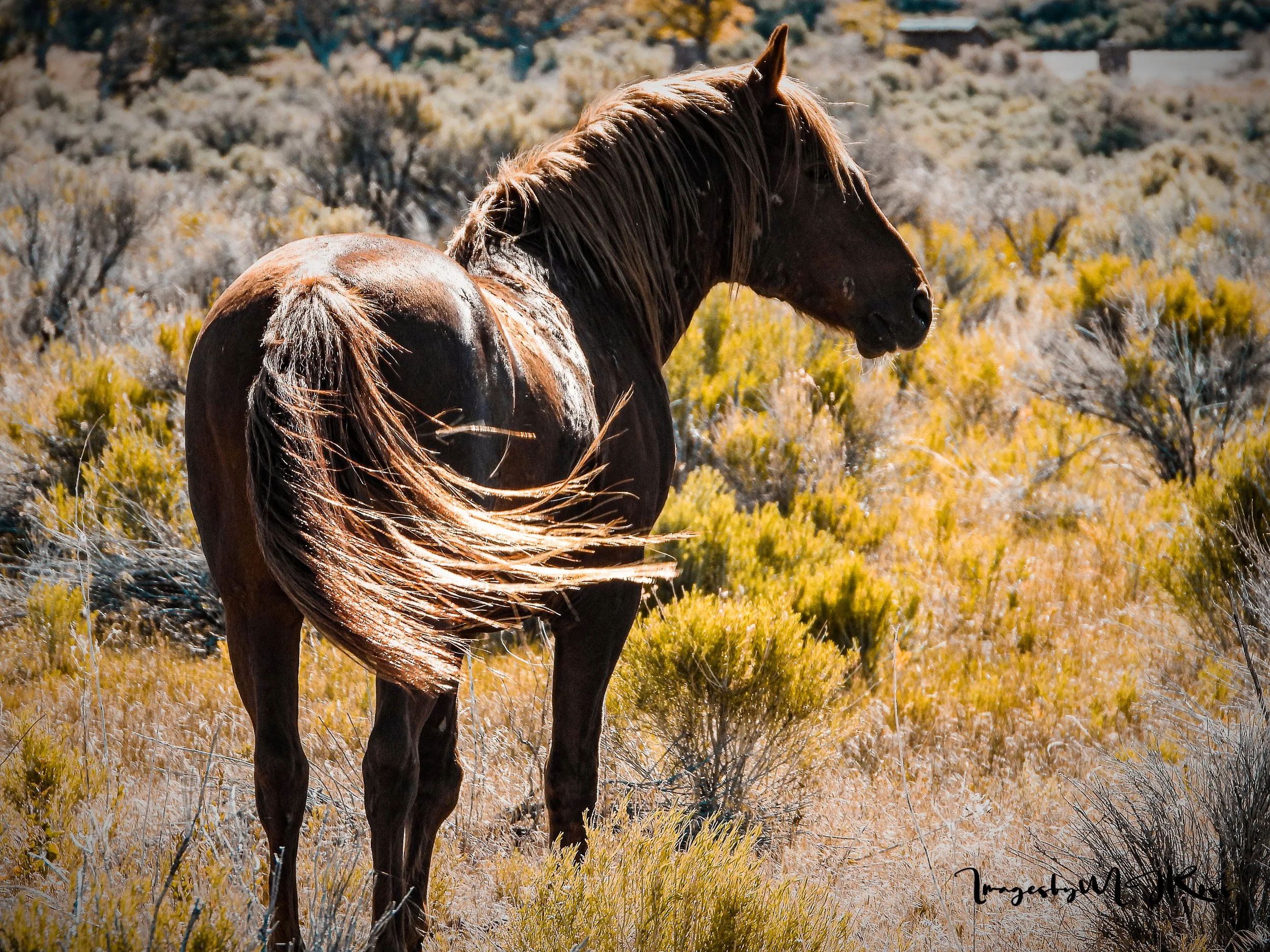
How You Can Help the Virginia Range Horses
Following the Virginia Range horses means more than reading about them. There are practical, legal, and constructive ways to support their welfare, public safety, and long-term presence on the range. Here are the most useful actions you can take.
1. Report Safety Issues Promptly
If you see a horse in immediate danger (on a busy road, injured, trapped, or in a construction zone), call the Wild Horse Connection Emergency Hotline
775-353-3608
For non-emergency concerns such as damaged fencing or suspected illegal feeding, you can also call the emergency hotline. Provide the date, time, exact location, and any identifying details.
Do not attempt to capture, chase, or move the animals yourself.
2. Never Feed the Horses
Feeding Virginia Range horses is illegal under Nevada law and can result in significant fines. Human food and even well-intentioned hay can draw horses into dangerous areas near roads and homes, create dependency, and increase conflict. Watering has also been restricted in official NDA guidance in some contexts. The safest approach is to admire them from a distance and leave them alone.
3. Drive with Extra Caution
The Virginia Range borders major roads and growing neighborhoods. Slow down in known horse areas, especially at dawn, dusk, and after dark. Watch for animals crossing or standing near the roadway. Reduced collisions protect both drivers and the horses.
4. Speak Up on Fencing and Water Access
Fencing projects are intended to keep horses off busy roads, but some segments have raised concerns about restricted access to traditional water sources such as Washoe Lake and other reliable spots. If this issue matters to you:
Attend public meetings of the Washoe County Commission, Reno City Council, or NDA Board of Agriculture when Virginia Range topics appear
Submit written comments to local and state officials
Ask specific questions about water access, wildlife-friendly fence design, and monitoring of herd condition after new fencing is installed
Clear, factual comments are more effective than general complaints.
5. Observe Responsibly
When viewing the horses:
Stay in your vehicle or on public roads and trails
Keep a respectful distance
Do not approach bands, especially mares with foals or stallions
Never try to touch, photograph at close range, or interact with them
Responsible observation helps keep both people and horses safe and reduces the chance of animals becoming habituated to humans.
6. Share Accurate Information
One of the most useful things you can do is point people to primary sources — NDA materials, the actual text of NRS 569.431, City of Reno project pages, and BLM decision documents — rather than rumors or incomplete social-media posts. When information is contested (for example, the effects of specific fence segments on water access), note that the disagreement exists and link to both agency statements and independent reporting.
7. Stay Informed and Stay Involved
Bookmark the key pages listed in the Sources & Transparency article. Check for new NDA updates, City of Reno project announcements, and AWHC reports. Local news outlets such as This Is Reno and The Nevada Independent often cover meetings and new developments first.