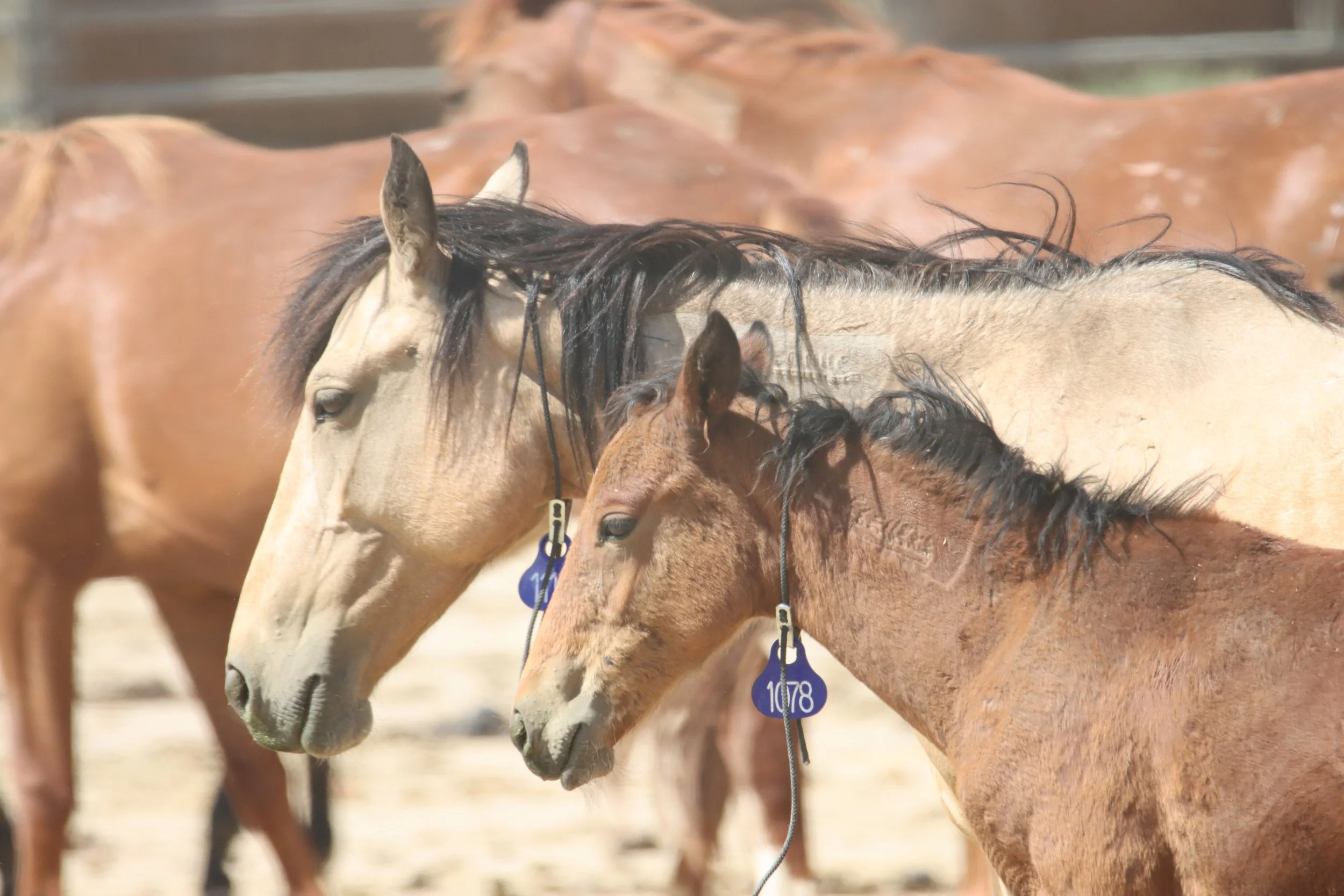
The Wild Horse and Burro Comprehensive Animal Welfare Program (PIM 2021-002): A Promise Unfulfilled
In 2021, the Bureau of Land Management (BLM) introduced the Wild Horse and Burro Comprehensive Animal Welfare Program under Policy Instruction Memorandum (PIM) 2021-002. On paper, the policy was presented as a long-overdue commitment to prioritize the welfare of America’s wild horses and burros throughout all phases of management—roundups, transport, holding, adoption, and long-term care.
In practice, however, the outcomes experienced by wild horses and burros tell a far different story.
This article examines what PIM 2021-002 claims to protect, how it is implemented, and why serious animal welfare concerns persist despite the existence of this policy.
What Is PIM 2021-002?
PIM 2021-002 was issued by the BLM to establish a “comprehensive” framework for animal welfare within the Wild Horse and Burro Program. The policy applies to:
Helicopter roundups
Bait and water trapping
Handling and processing
Short- and long-term holding facilities
Transportation
Adoption and sale programs
The policy emphasizes:
Minimizing stress and injury
Providing humane handling
Monitoring animal condition
Ensuring access to veterinary care
Recording and reporting injuries and deaths
At its core, PIM 2021-002 acknowledges what advocates have long said: management actions themselves pose significant risks to wild horses and burros.
The Gap Between Policy and Reality
Despite the stated goals of the Comprehensive Animal Welfare Program, documented injuries, deaths, and long-term suffering continue at alarming rates.
1. Deaths Are Narrowly Defined
BLM frequently reports that fewer than 1% of horses die “during roundups.”
However, PIM 2021-002 allows deaths to be categorized in ways that exclude animals who die shortly after capture, including:
Deaths from capture myopathy days or weeks later
Foals separated from mares who later perish
Injuries sustained during roundups that lead to euthanasia in holding
Deaths in short-term holding facilities shortly after capture
These animals are often not counted as roundup-related deaths, despite the clear causal connection.
2. Capture Myopathy Remains a Leading Cause of Death
Capture myopathy—a stress-induced, often fatal condition—is well known in wildlife management.
Yet horses are still chased for miles by helicopters, sometimes in extreme heat, over rough terrain, and at full speed.
PIM 2021-002 acknowledges stress risks but fails to prohibit practices that directly cause them.
The result:
Horses collapse
Muscles break down
Organs fail
Death occurs days or weeks later
This is not an unforeseen consequence—it is a known outcome.
3. Foals, Seniors, and Vulnerable Horses Are Not Adequately Protected
While the policy references special consideration for:
Pregnant mares
Foals
Aged horses
Roundups continue to target entire herds regardless of condition. Foals are routinely pushed beyond their physical limits, and older horses struggle to keep pace.
Many of these animals survive the initial capture only to deteriorate rapidly in holding facilities.
4. Holding Facilities Are a Welfare Crisis
PIM 2021-002 extends animal welfare requirements to short- and long-term holding facilities, yet conditions remain deeply concerning:
Overcrowding
Limited shelter from extreme weather
Stress-related illness
Injuries from confinement and fencing
Inadequate transparency regarding deaths
Facilities such as Winnemucca and other off-range holding locations have recorded multiple deaths following roundups, raising serious questions about compliance with the policy.
Lack of Transparency and Accountability
One of the most troubling aspects of PIM 2021-002 is that there is no meaningful enforcement mechanism.
The BLM monitors itself
Contractors are rarely penalized
Independent observers have limited access
Full mortality data is difficult to obtain
Cause-of-death reporting lacks consistency
A welfare policy without accountability is not protection—it is paperwork.
Why This Matters
Wild horses and burros are protected under the 1971 Wild Free-Roaming Horses and Burros Act, which recognizes them as:
“Living symbols of the historic and pioneer spirit of the West.”
PIM 2021-002 was supposed to strengthen that protection—not dilute it.
When welfare policies exist but animals continue to die, suffer, and disappear into holding facilities or sales pipelines, the intent of the law is violated.
What Real Animal Welfare Would Look Like
A truly comprehensive animal welfare program would include:
Protecting family bands and natural behaviors
Counting all deaths related to capture and confinement
Independent veterinary oversight
Full public transparency of injuries, deaths, and facility conditions
Holding the BLM accountable for outcomes—not intentions
Conclusion: Welfare in Name Only Is Not Enough
PIM 2021-002 acknowledges that wild horses and burros deserve humane treatment.
But acknowledgment without action does not save lives.
Until management practices change, until transparency is enforced, and until deaths after roundups are fully counted and addressed, the Comprehensive Animal Welfare Program remains a promise unfulfilled.
Wild horses and burros deserve more than policy memos.
Real change does not come from policy memos—it comes from people who refuse to look away.
Please donate to Wild Horses Lives Matter and help us protect America’s wild horses and burros.