
BlueWing roundup and the Failure of Animal Welfare Oversight- we all remember this roundup well.
The Blue Wing Roundup
The Blue Wing roundup began on July 8, 2024, during one of the most extreme heat advisories in years. Almost every morning started at 4:00 a.m. as we tried to beat the rising temperatures. By 10:00 a.m., the heat was already well over 95 degrees. The roundups ran seven days a week, continuing relentlessly until the targeted number of mustangs was removed.
Mormon crickets were everywhere, covering the ground in moving waves, while rattlesnakes hid deep in cracks in the rocks.
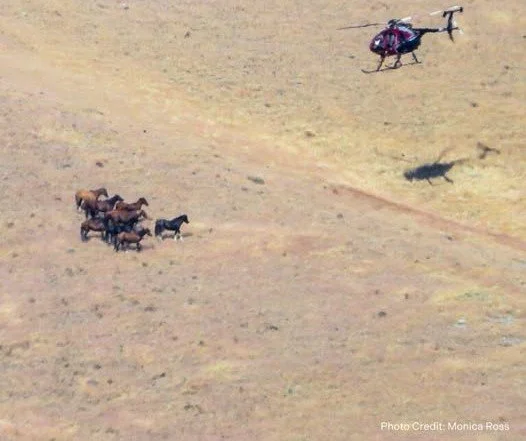
As the days dragged on, exhaustion set in. Twenty-five days into the roundup, lack of sleep and constant exposure to the sun left nerves raw and tempers stretched thin. We sat and waited, hour after hour, for the sound of the helicopter returning with the next terrified group of mustangs.
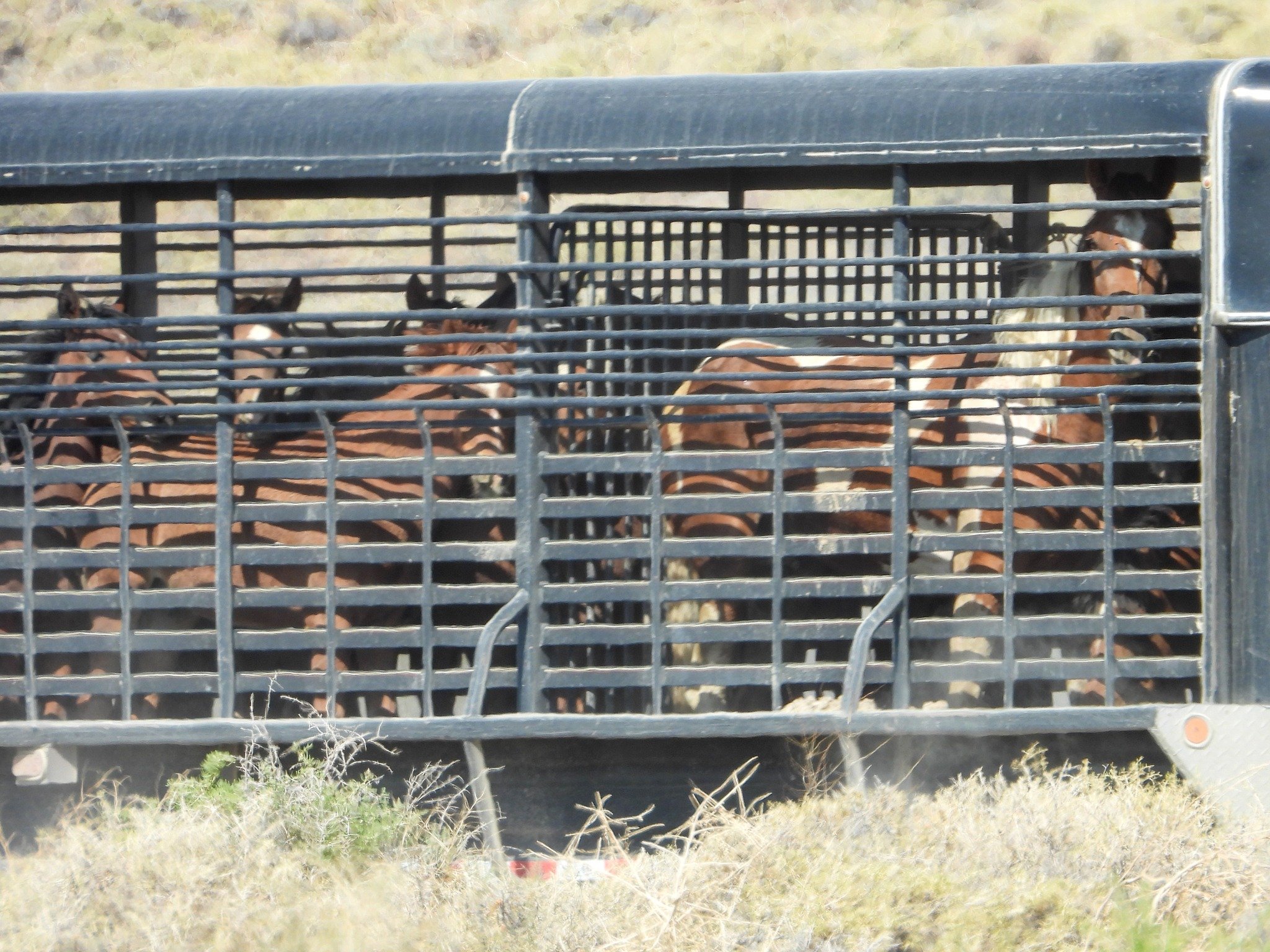
The 2024 Blue Wing roundup became the deadliest of the year for U.S. wild horse and burro roundups. A total of 1,665 animals were removed. Forty-two deaths were officially reported during the roundup, attributed to traumatic injuries such as broken necks, as well as euthanasia for pre-existing conditions. After shipping to short-term holding facilities, another 144 animals died.
Day Twenty-Five
By the twenty-fifth day of the roundup, it was midday, and the heat was relentless. Mormon crickets were everywhere, covering the ground, and earlier a rattlesnake had slithered through the observation area, a reminder that every living thing was desperately seeking shelter from the sun.
I sat listening for the helicopter to come into earshot,still invisible beyond the mountains I started my stopwatch. I wanted to know how long they would push the mustangs before forcing them into the trap. As the minutes passed, my anxiety grew. I had already witnessed a mare break her neck in a trailer earlier that day.
In the distance, a wall of dust began to rise. I stopped the watch as the horses came into view around the corner: one hour and ten minutes. As they entered the wings of the trap, the dust thickened until it was hard to see clearly. The wrangler released the Judas horse, then, at the last second, the mustangs jumped the jute.
Chaos erupted.
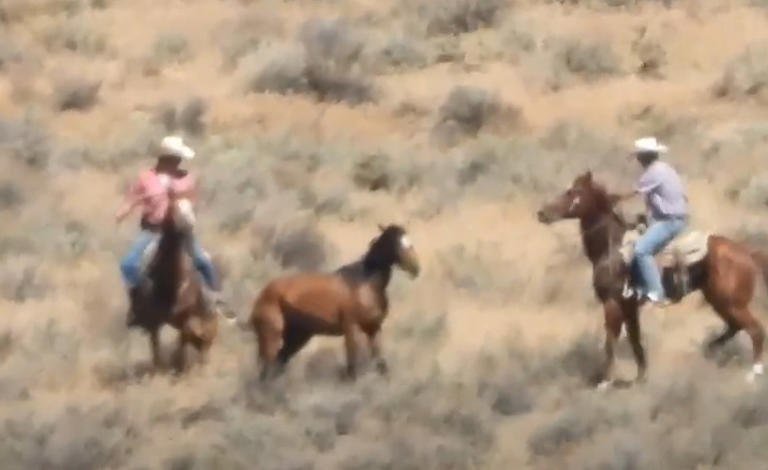
Wranglers jumped on their horses, ropes twirling through the air in every direction as mustangs scattered across the area. In the middle of the confusion, I focused on one wrangler who went after a younger horse. I watched as he threw a rope around the horse’s neck and jerked it sharply. Another wrangler rode over to assist.
It became clear the mustang was completely exhausted. The horse leaned against the wrangler’s mount, using it for support, until it finally collapsed to the ground in sheer exhaustion. I remember it as if it were yesterday.
The wrangler wrapped the rope tighter around his saddle horn and tried to pull the horse up. The mustang’s head lifted briefly, then dropped back to the ground. When the horse could not stand, the wrangler dismounted and began kicking the horse from behind in an attempt to force it up. When that failed, he walked around, punched the horse in the face, and then kicked it hard in the muzzle.
I could not believe what I was seeing.
This was abuse carried out by a wrangler hired by the Bureau of Land Management.
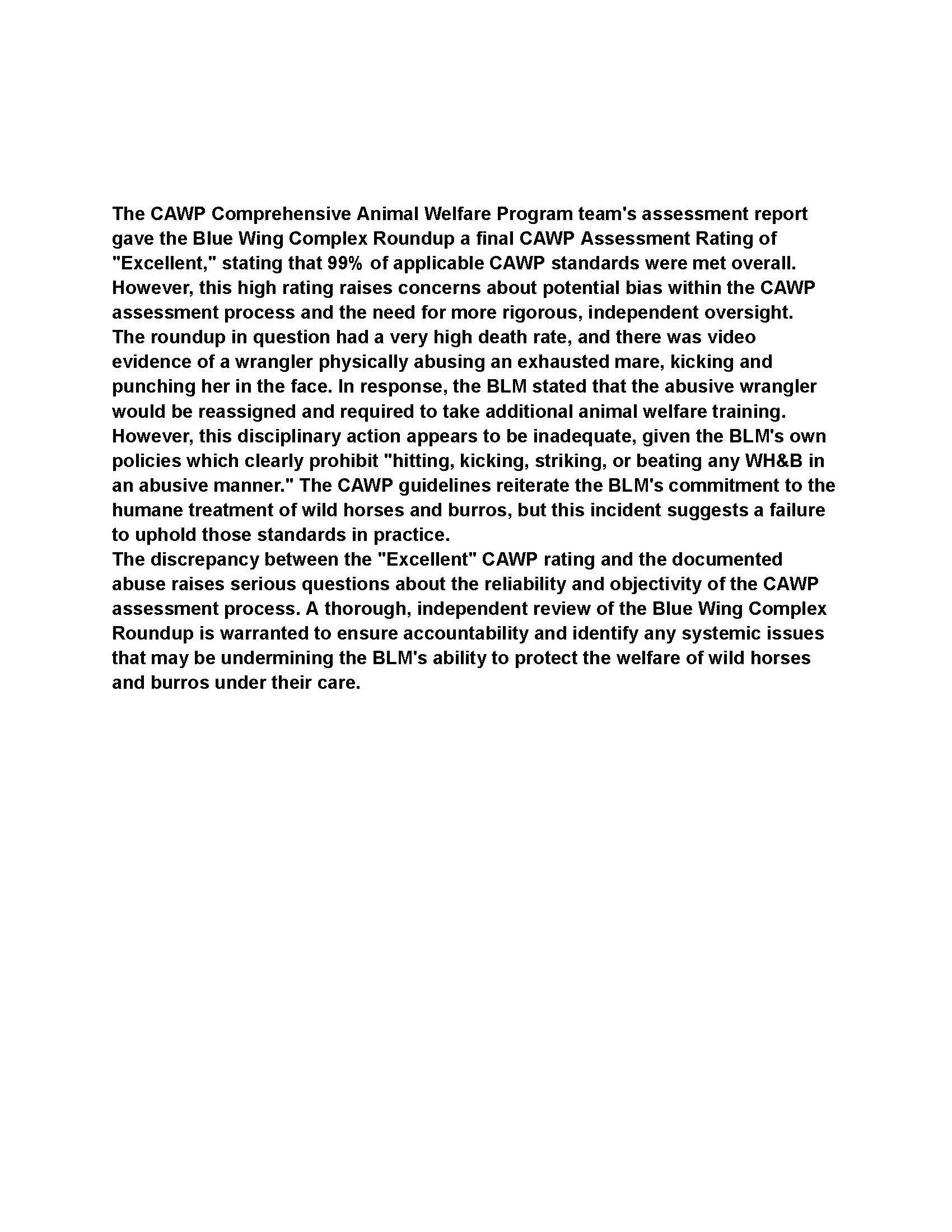
The Bureau of Land Management’s Comprehensive Animal Welfare Program (CAWP) is described as a proactive policy designed to protect the welfare of wild horses and burros under agency management. CAWP formalizes standard operating procedures for animal care and handling, establishes training programs in animal welfare for BLM personnel, partners, and contractors, and includes internal and external assessments for all activities in the Wild Horse and Burro Program.
Under CAWP guidelines on roping, wild horses and burros may escape or evade a gather site while being moved by helicopter. If there are mare and dependent foal pairs in a group and one half of an identified pair is believed to have evaded capture, roping is not supposed to occur particularly not of adult horses.
What I witnessed that day stood in direct contradiction to the very policies meant to protect these animals.
After reviewing the footage I had captured, I made the decision to release it publicly on social media. Once the video went public, the Bureau of Land Management issued a statement acknowledging that the wrangler’s actions were wrong and stating that he would be required to undergo additional CAWP training.
The CAWP for the Wild Horse and Burro Program consolidates and highlights BLM policies, procedures, and the agency’s stated commitment to protecting animal welfare. It is intended to provide training for employees, contractors, and partners on proper animal care and handling, and to implement assessment tools to evaluate adherence to CAWP standard operating procedures by the agency, its contractors, and partners.
To determine whether the BLM followed through on what it publicly stated, I submitted a Freedom of Information Act (FOIA) request seeking documentation that this wrangler completed the obligations and training the agency claimed would be required.
When the FOIA response came back, it revealed the truth. The records showed that the Bureau of Land Management ultimately determined that the wrangler had done nothing wrong. No corrective action was taken. No additional CAWP training was required.
This directly contradicted the public statement the BLM had released after the footage went viral. The agency told the public the wrangler’s actions were wrong and that corrective measures would be taken, yet internally concluded the opposite. The FOIA response made it clear: the public was misled.
Final Reflection
What happened at Blue Wing did not end with the roundup itself, the suffering of the mustangs, the documented abuse, and the agency’s own public acknowledgment should have led to accountability. Instead, the FOIA revealed a deliberate disconnect between what the Bureau of Land Management told the public and what it concluded behind closed doors. This failure to enforce its own Comprehensive Animal Welfare Program undermines the very purpose of CAWP and erodes public trust. When evidence of abuse can be dismissed internally after being condemned publicly, it raises serious questions about oversight, transparency, and the true commitment to protecting America’s wild horses.
*At Wild Horses Lives Matter, we are a transparent and visionary 501c3 non-profit organization dedicated to protecting Wild Horses on the range and during roundups and the overall welfare and compliance once placed into holding facilities and through the adoption process. Our team is committed to ensuring that Wild Horses and Burros are treated humanely. We understand these magnificent creatures' challenges and are responsive to their needs, actively working to implement effective solutions through our initiatives. With your support, we can continue our mission to safeguard the lives of wild horses and advocate for their rights. Together, we can make a real difference!
Please help us continue our mission
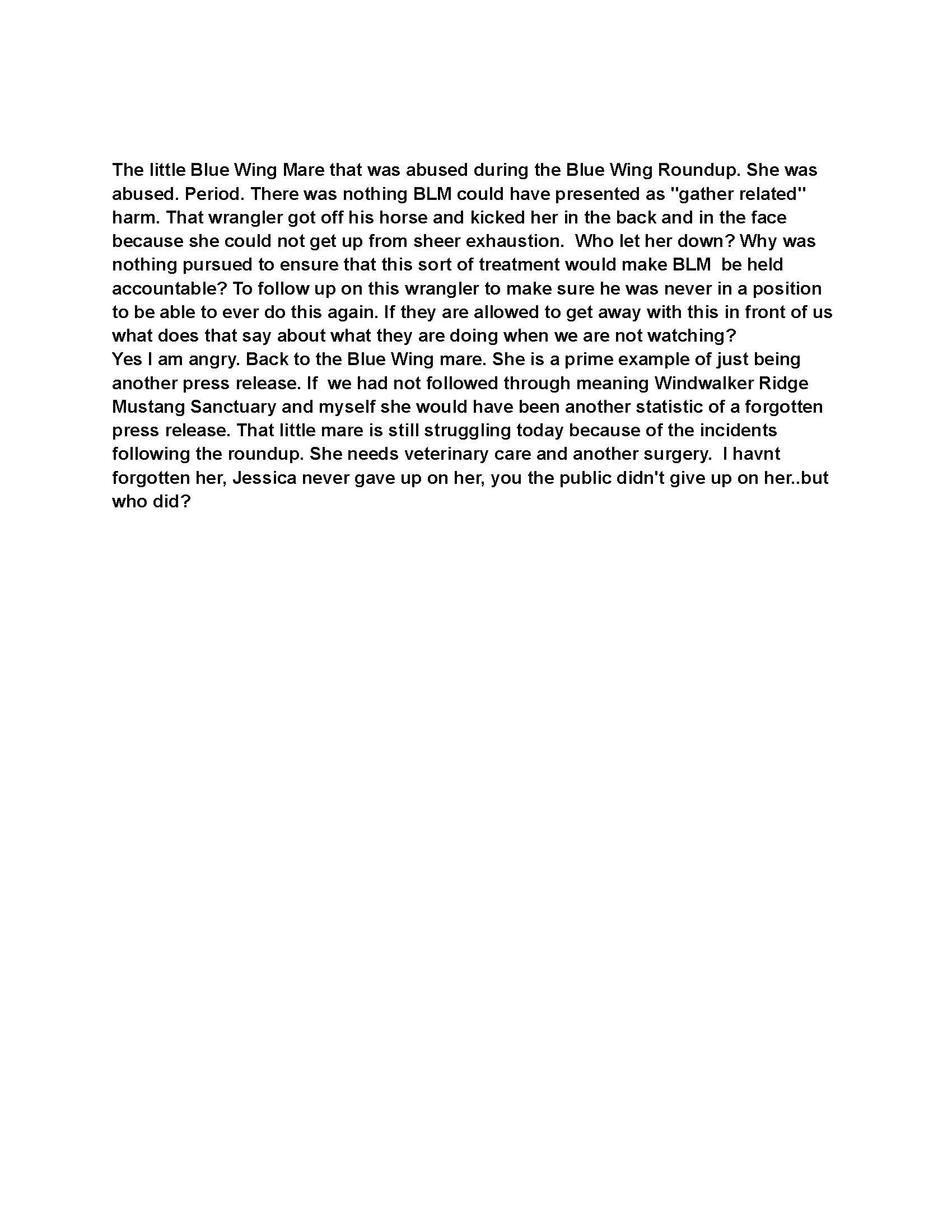
Thank you to Winwalker Ridge Mustang Santuary ( Read Here)
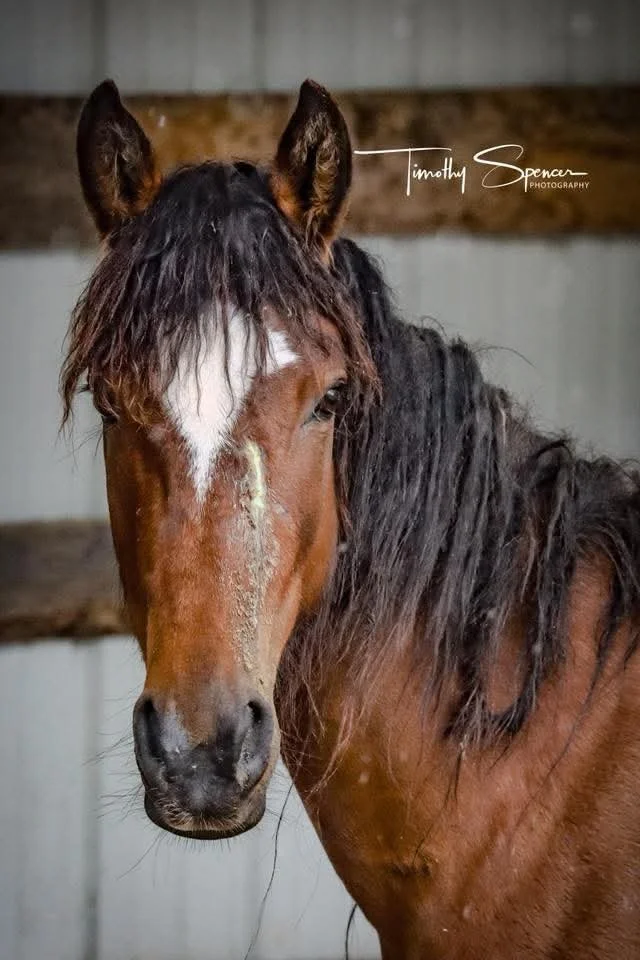
Timothy Spencer Photography
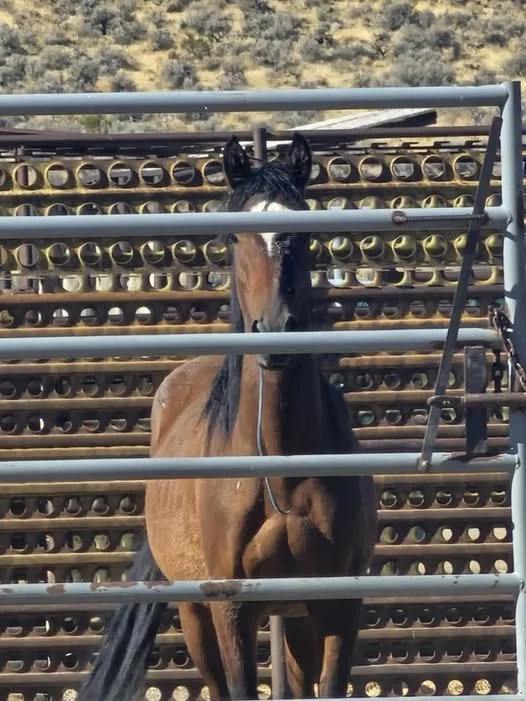
The Bluewing Horses that took a stand againg the helecopter
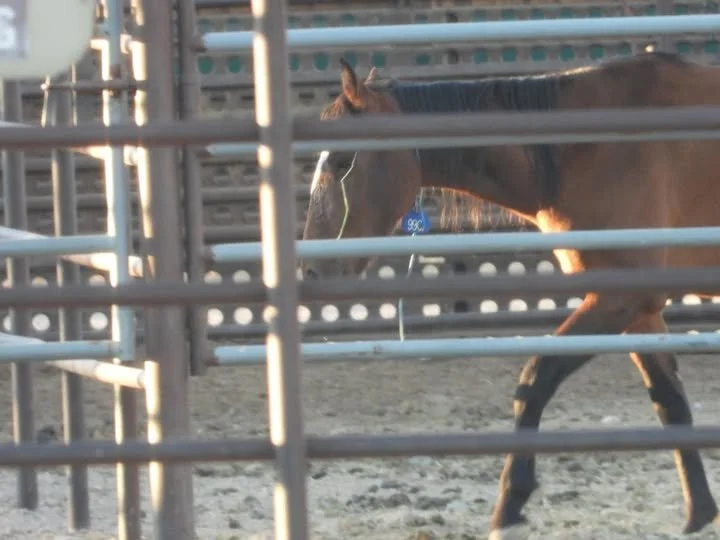
To Primrose for being the beautiful mare she has turned out to be and withstanding all she endured.