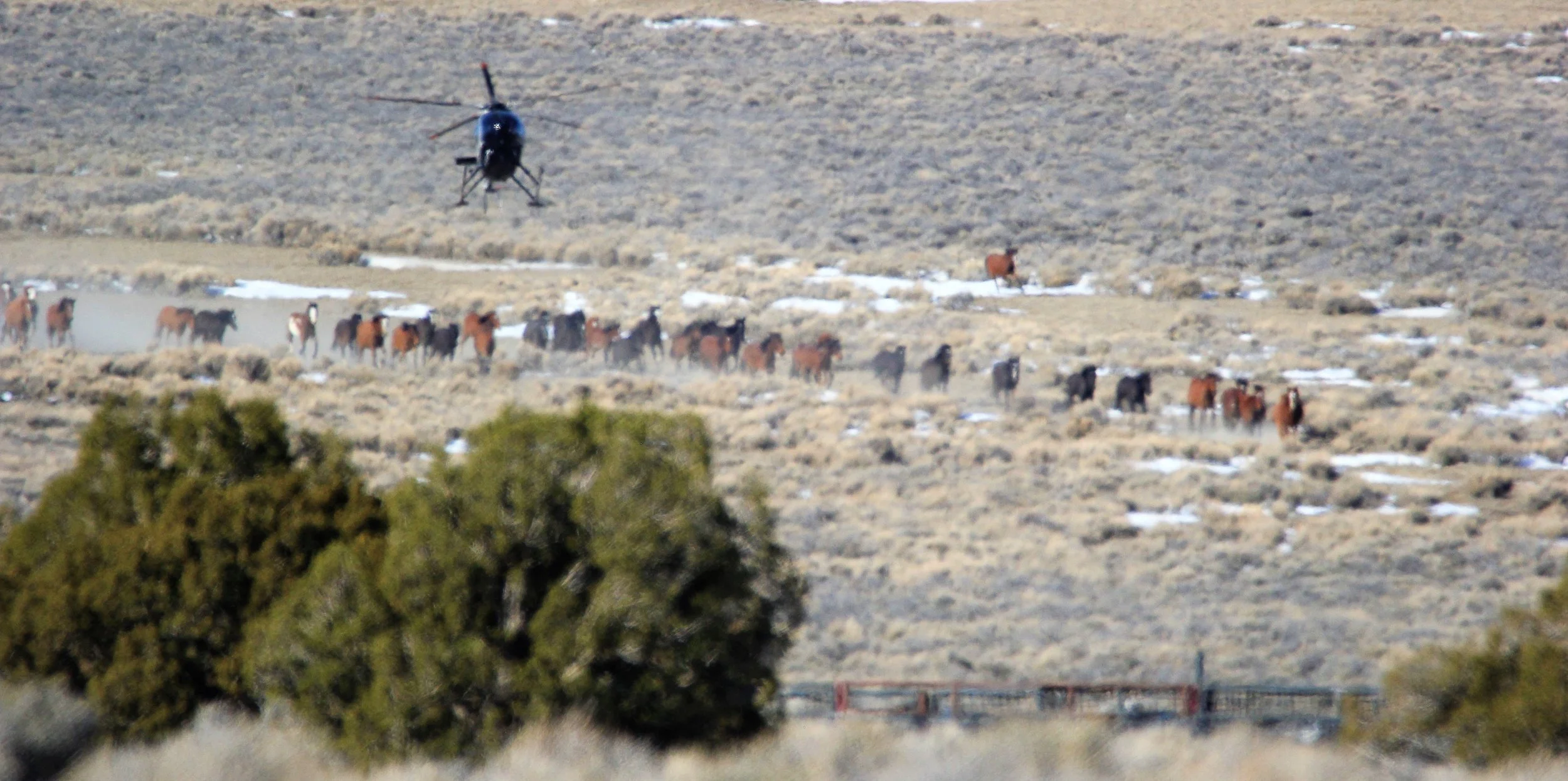
So What Is the Real Mortality Rate? The real death toll of a roundup is not just what happens at the trap. It’s everything that happens because of the trap.
For years, the Bureau of Land Management (BLM) has defended helicopter roundups with the same familiar statistic: “Fewer than 1% of wild horses die during roundups.”
It’s a reassuring number right? Tidy, controlled, and designed to suggest that roundups are safe and humane.
But anyone who has looked beyond the surface knows the truth:
That 1% figure is only a small piece of the real story.
What the BLM Counts .. and What They Don’t
The BLM’s 1% mortality rate only covers horses that die or are euthanized on site.
So What Is the Real Mortality Rate?
The real death toll of a roundup is not just what happens at the trap.
It’s everything that happens because of the trap
When all deaths connected to the roundup include trap-site, short-term holding, long-term holding, and surgical complications the mortality rate becomes significantly higher.
The BLM knows this.
But they only publicize the number that makes the operation look humane.
The Public Deserves the Whole Truth
Wild horses are not dying because they are sick, weak, or “starving on the range.”
They are dying because they are being chased, stressed, injured, and torn from the environment their bodies evolved to survive in.
The BLM’s 1% statistic allows the agency to present roundups as low-risk, routine events.
But when dozens of horses die in the days, weeks, and months after a roundup, that statistic becomes a half-truth — and half-truths do not protect our wild horses.
→ → → READ MORE HERE SEE THE DEATHS RATES AFTER TWO ROUNDUPS AND A BLM SHORT TERM HOLDING FACILITY
Wild Horses Lives Matter is fighting back, but we can’t do it alone.
👉 Donate today: DONATE
💙 Please follow us or reach out if you have any questions — your voice matters as much as theirs.