
Beyond the Roundup series #2: BLM Records List 181 Wild Horse Deaths, Most in Holding
With the East Pershing Roundup looms again on the roundup schedule due to start January 5 -15 2027 I wanted to take a look at the numbers from the last roundup that lasted for a little over a month and a half removing 2,692 wild horses. This is my second report in my series of Beyond the roundups what happens after removal.
When wild horses disappear from the range, the public’s attention often moves on. But their story continues in holding facilities, through processing, and into adoption or sale. Protecting them requires following what happens after removal.
Wild Horses Lives Matter reviewed a 182-page BLM “Gathered Animals” report run on October 3, 2026. It contains 2,534 horse records with capture dates from December 13, 2023, through February 5, 2024 ( The number reported that were removed from the range was 2692 leaving 158 unaccounted for from the records on the reporting and what was reported at the time of the roundup). Of those records, 181 list the horse as dead—7.1% of the animals included in this report.
The most significant finding is where those deaths occurred: 26 at the trap or gather site and 149 in holding facilities. Another six occurred in adopter/private care, buyer/private care, or a location classified as “Other.”
These are recorded outcomes for the horses in this inventory. They are not an annual mortality rate, and the report does not establish that every death was caused by the roundup however a qustion remains had they not been rounded up would they still be alive?
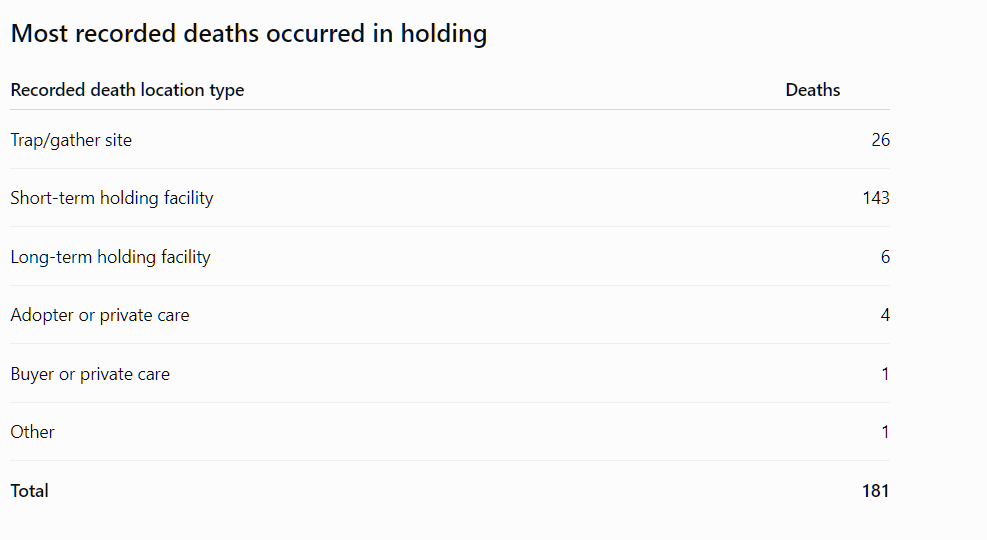
East Pershing FY2024 Death Rate
Holding facilities account for 82.3% of the recorded deaths. Winnemucca Preparation Facility is the named death location for 131 horses. That count concerns horses in this report; it is not a facility-wide death total or mortality rate.
The death dates range from December 29, 2023, through June 4, 2026. Fifty deaths occurred more than a year after the horse’s recorded capture date. A tally limited to the roundup itself would leave those later outcomes out of view.
Injuries and complications deserve closer scrutiny
The recorded causes include acute injuries, foaling complications, poor body condition, and complications associated with gelding.
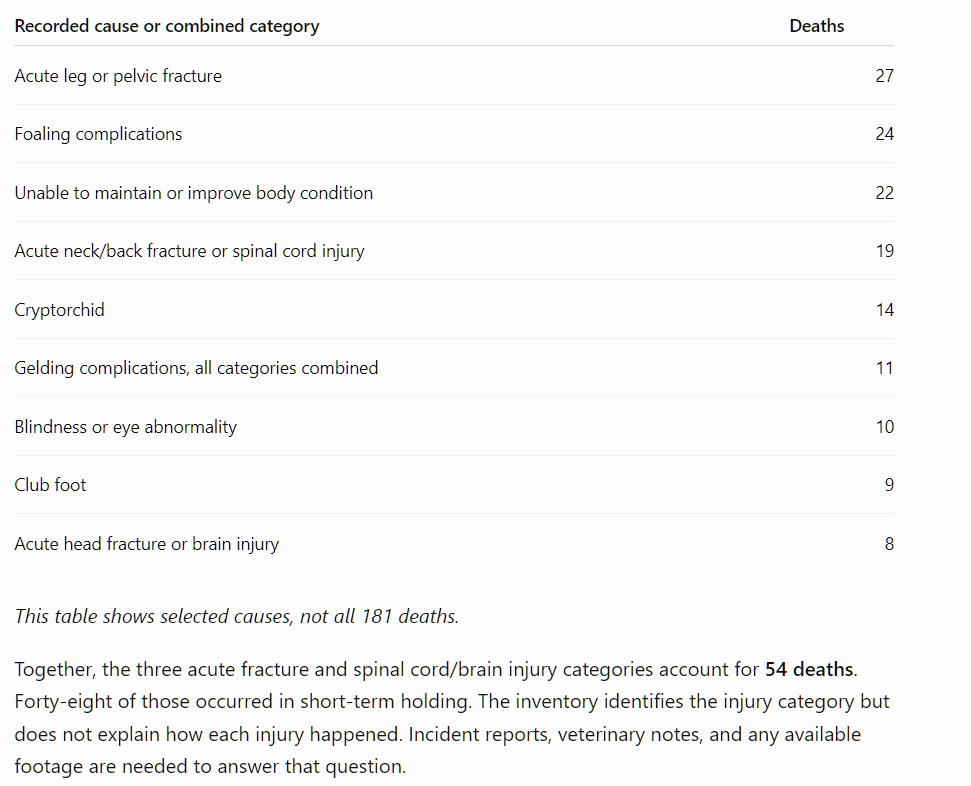
Cause of death
All 24 deaths coded as “Foaling Complications” occurred at Winnemucca: 18 in 2024 and six in 2025. The export does not provide sufficient clinical detail to establish whether each entry concerns a mare, a foal, or circumstances involving both. Those entries raise questions about pregnancy monitoring, foaling assistance, and emergency veterinary care.
The 11 gelding-complication deaths consist of seven coded “Other,” two evisceration, and two hemorrhage. A separate record lists an anesthetic death without identifying the procedure. These records warrant examination of surgical notes, anesthesia records, and postoperative monitoring.
Another 14 horses were euthanized with “Cryptorchid” listed as the cause, all at Winnemucca. The inventory does not explain the clinical circumstances or the treatment options considered. Veterinary records and euthanasia authorizations are needed to understand those decisions.
Overall, BLM’s manner-of-death field classifies 84 deaths as euthanasia and 97 under “Died” categories.
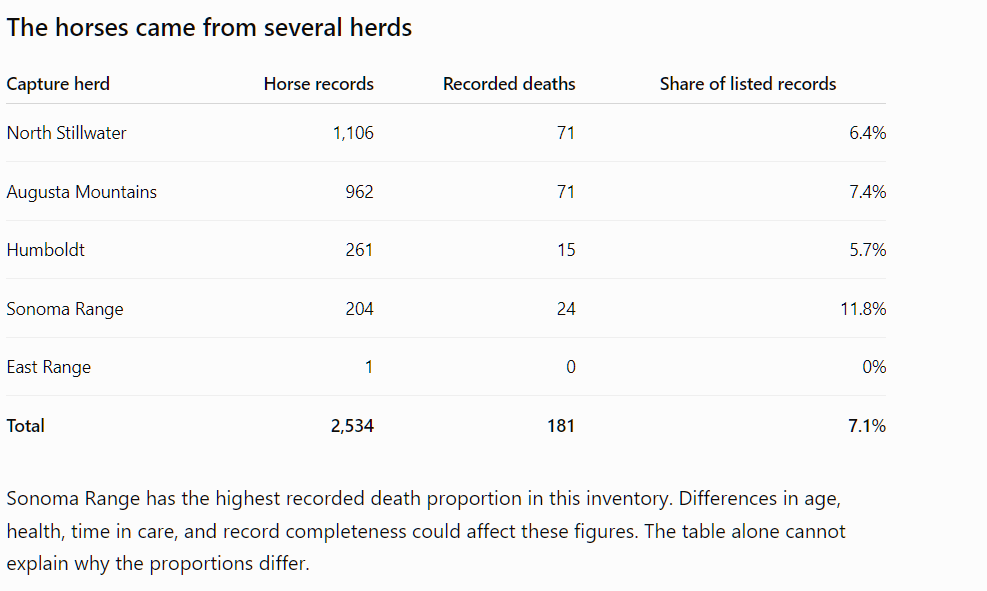
HMAs
Transparency must follow the horses
Seventy-three of the 181 death records have neither a freezemark/TempID nor a chip number displayed in this export. That does not establish that identifiers are absent from BLM’s underlying records, but it makes tracing individual horses from this report more difficult.
The report also lists 241 horses as sold and 798 as eligible for sale. These are separate current disposition categories. Eligibility does not mean a completed sale, and a “Sold” designation does not identify the buyer or establish the horse’s eventual destination.
Meaningful transparency requires records that allow the public to follow each horse: identifiers, transfers, veterinary treatment, injuries, euthanasia decisions, and placement outcomes. For these deaths, the next step is obtaining the supporting veterinary and incident records—especially for acute injuries, foaling complications, gelding complications, and cryptorchid-related euthanasia.
These numbers represent individual horses whose lives continued after they left the range. Our responsibility to them continues too. Wild Horses Lives Matter advocates for protection during roundups and beyond, and for public access to the records needed to understand what happened to them.
Source and method: WHLM analysis of the BLM “Gathered Animals” report, run October 3, 2026, supplied as Gathered epAnimals(1).pdf. All 2,534 listed rows were counted by current disposition, capture herd, recorded death location, cause, and date. Cause categories reproduce or combine BLM’s labels as indicated. “Current Age” was not treated as age at death. This report is a snapshot of the listed records and does not establish completeness for all horses captured during the period, causation, negligence, or preventability.
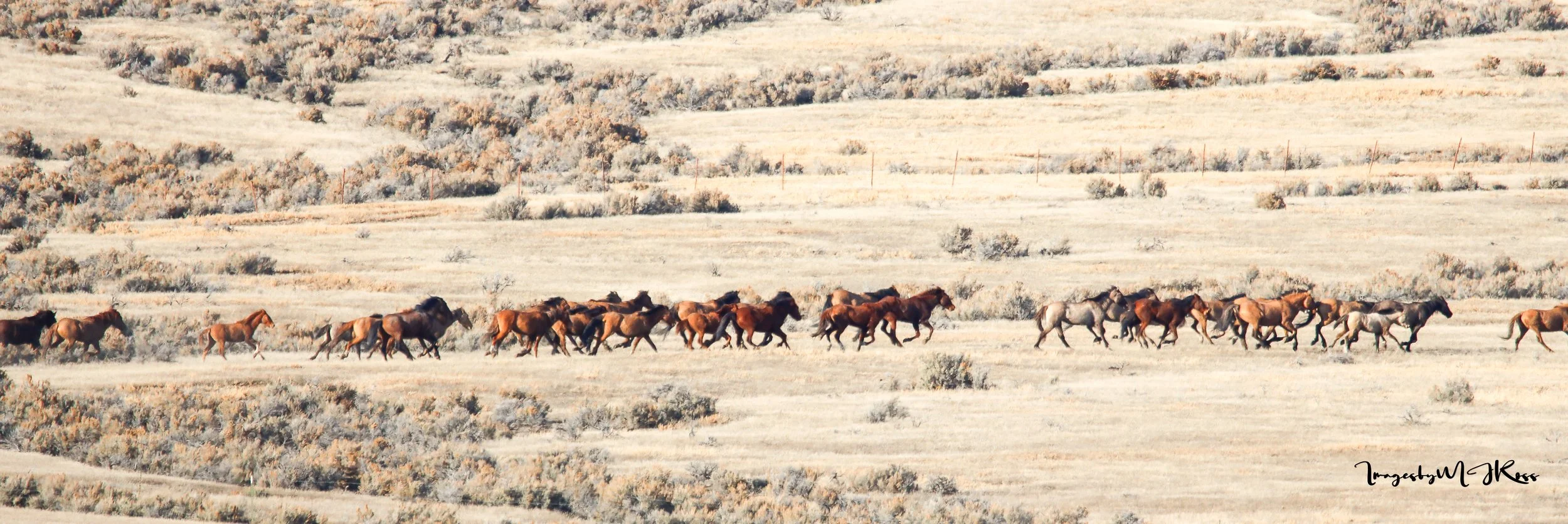
East Persing
We cannot document what happens if we cannot afford to be there.
Please donate if you are able, share this post, and help us ensure these horses are not removed from their homeland without independent witnesses present.
Every donation—no matter the amount—helps put eyes on the roundup and gives these horses a voice.
Please support roundup observation. The horses deserve transparency, accountability, and humane treatment.
May wild things be free forever. 🐴WHLM is a 50c3 dedicated to saving Wild Horses on and off the range